

Dubai’s branded residences market is continuing to expand as luxury buyers increasingly look for more than just a prime address. The combination of internationally recognised brands, hospitality-style services, lifestyle amenities and Dubai’s position as a global wealth hub is helping drive demand for branded homes across the emirate.
According to Knight Frank’s The Residence Report 2026/27, Dubai is now the world’s largest city market for branded residences, with 175 schemes, including 68 live developments and 107 in the pipeline. The scale of Dubai’s market is more than twice that of Miami, which has 73 schemes, while London has 30.
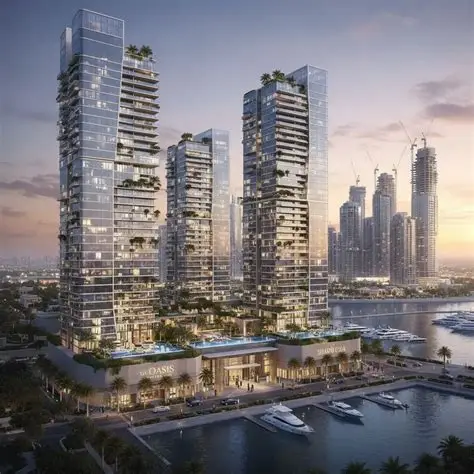
From luxury homes to lifestyle experiences
Branded residences are residential properties connected to an established hospitality, fashion, automotive or lifestyle brand. They typically combine private ownership with services and amenities associated with luxury hotels or other premium brands.
The concept has become increasingly relevant in Dubai, where international buyers are often looking for properties that combine location, quality, services and a recognisable identity.
The market is also becoming more diverse. Knight Frank estimates that hotel brands account for around 70% of operational branded residence schemes globally, but their share falls to around 60% when pipeline developments are included. Non-hotel brands are expected to represent almost 40% of supply by 2028, compared with around 30% in 2025.
This shift is bringing fashion, automotive and lifestyle names further into the residential sector and giving developers additional ways to differentiate their projects.
Dubai’s growing pipeline
Dubai’s position is not only based on the number of existing branded developments. A significant portion of future supply is already in the pipeline.
Knight Frank recorded 107 branded residence schemes in Dubai’s pipeline, compared with 68 live developments. This indicates that the sector is still expanding rather than simply relying on its established stock.
Separate H1 2026 data from Morgan’s Realty recorded 183 branded residential developments and 64,744 units in Dubai as of June 30, following the addition of eight developments and 5,184 units during the first half of the year.
The difference between the datasets reflects different reporting methodologies and definitions, but both point to the same broader trend: Dubai’s branded residential sector continues to add projects and inventory.
Buyers are paying for the brand and the service
The financial premium associated with branded residences is another factor behind the sector’s growth.
CBRE’s UAE Branded Residences Report 2025 found that branded units in Dubai achieved an average 64% premium compared with non-branded properties during the first nine months of 2025. The report linked the market’s appeal to factors including brand prestige, lifestyle integration, investor confidence, Dubai’s safe-haven characteristics and tax advantages.
More recent H1 2026 data from Morgan’s Realty recorded an average achieved price of AED 3,662 per square foot, representing a 56% premium over comparable non-branded residences in its analysis.
These figures suggest that buyers are not simply paying for a logo. The proposition increasingly includes the wider residential experience, from property management and concierge services to amenities, design and hospitality.
Wellness becomes part of the residential offer
Another major change is the growing role of wellness in luxury residential development.
Traditional luxury developments have typically focused on swimming pools, gyms, spas and leisure facilities. Newer branded residences are increasingly going further, incorporating health and wellness into the core residential experience.
Knight Frank highlights developments in Dubai and Abu Dhabi that include facilities such as longevity clinics, IV lounges and biohacking spaces. At Six Senses The Palm in Dubai, for example, a 60,000-square-foot wellness club is planned to include a longevity clinic, IV lounge and biohacking room.
This reflects a broader shift in luxury real estate, where buyers are increasingly looking for homes that support lifestyle, health and wellbeing rather than simply providing high-end finishes.
Dubai leads, but the UAE market is broadening
Dubai remains the largest branded residence market in the region, but other UAE destinations are also developing rapidly.
Knight Frank ranks Abu Dhabi eighth globally with 24 schemes, including 19 in the pipeline. Al Marjan Island in Ras Al Khaimah ranks ninth with 23 schemes, all of which are yet to be delivered according to the report.
The three markets are developing differently. Dubai has an established residential and hospitality ecosystem, Abu Dhabi is expanding its luxury residential offering alongside its growing financial and business sectors, while Ras Al Khaimah is increasingly linked to resort and tourism-led development.
For buyers and investors, this creates a wider range of branded residential options across different locations and lifestyles.
What comes next for Dubai’s branded residences market?
Dubai’s branded residences market is entering a larger and more competitive phase. The number of projects continues to rise, while the concept itself is expanding beyond traditional hotel brands into fashion, automotive, wellness and other lifestyle categories.
For developers and buyers alike, however, the growing supply means that branding alone may not be enough to differentiate a project. Location, design, service quality, amenities, pricing and long-term management are likely to remain important factors in how individual developments perform.
As Dubai continues to attract international wealth and expand its luxury residential offering, branded residences are becoming an increasingly important part of the emirate’s property landscape.
Main Sources:
Knight Frank – The Residence Report 2026/27; CBRE UAE Branded Residences Report 2025; Morgan’s Realty H1 2026 Branded Residences Report.