
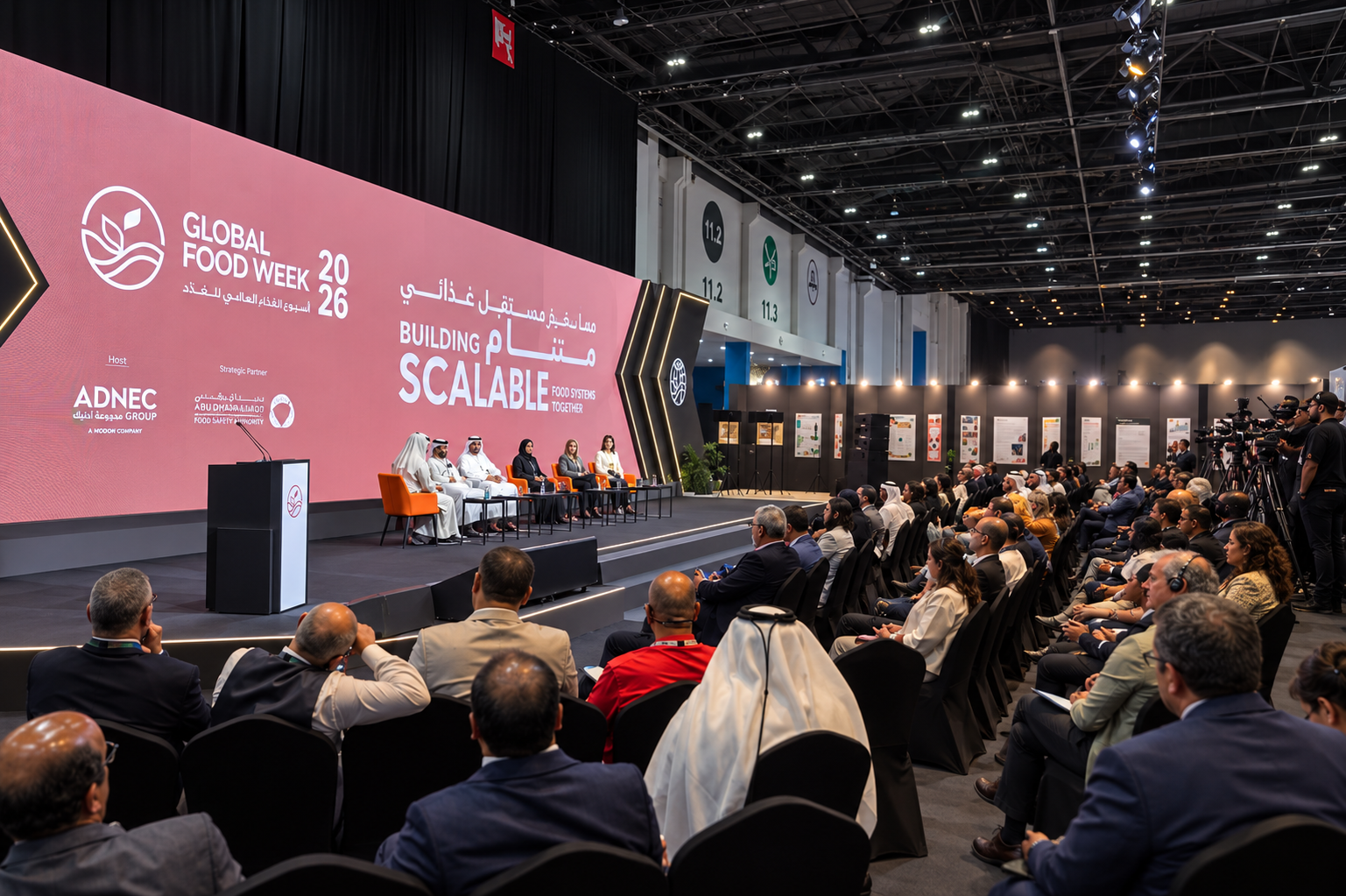
The three-day event brought together 2,580 exhibitors from 92 countries, highlighting investment opportunities, food security and agricultural innovation.
Global Food Week 2026 concluded in Abu Dhabi with 97 agreements worth a combined AED 6.9 billion, reinforcing the growing economic significance of the food and agriculture sectors. Held from October 6 to 8 at ADNEC Centre Abu Dhabi, the event brought together producers, manufacturers, investors and policymakers to explore how food security, technology and international trade can create new opportunities for business growth.
As global food systems face increasing pressure from climate change, water scarcity and supply chain disruptions, the event highlighted a broader transformation: food security is becoming not only a national priority but also a driver of industrial development, innovation and investment.
Global Food Week 2026 Records AED 6.9 Billion in Agreements
The 2026 edition concluded with 97 signed agreements valued at AED 6.9 billion, representing a 5% increase in deal value compared with the previous edition.
Organised by ADNEC Group, a Modon company, in strategic partnership with the Abu Dhabi Agriculture and Food Safety Authority (ADAFSA), the event was held under the patronage of H.H. Sheikh Mansour bin Zayed Al Nahyan, Vice President, Deputy Prime Minister and Chairman of the Presidential Court.
Global Food Week attracted more than 47,000 visitors over three days, a 17% increase from 2025. It also featured 2,580 exhibitors from 92 countries, with exhibition space expanding by 25% to approximately 42,000 square metres.
These results reflect the event’s expanding commercial reach. However, the AED 6.9 billion figure represents the announced value of signed agreements, rather than revenue already generated or the total value of projects fully implemented.
The longer-term economic impact will depend on how these agreements translate into production, trade, investment and business partnerships.
Food Industry Investment Extends Across the Supply Chain
The economic importance of food extends far beyond agricultural production. Processing, packaging, warehousing, distribution and international trade all contribute to the industry’s value, creating opportunities for companies operating at different stages of the supply chain.
At Global Food Week 2026, small and medium-sized enterprises accounted for 22% of exhibiting companies. A dedicated area for SMEs and local food and beverage businesses provided additional visibility and access to potential commercial partners.
The Hosted Buyers Programme also facilitated structured meetings between exhibitors and pre-qualified international buyers, including commercial farm operators, food manufacturers and global procurement teams.
These connections are particularly important for businesses seeking to expand into new markets, where reliable supply, product quality and compliance with international standards can determine commercial success.
For the first time, the event also combined its established business-to-business activities with a direct consumer experience through the expanded “Shop at the Show” initiative, allowing visitors to discover and purchase products from participating exhibitors.
The development reflects the growing diversity of the UAE’s food economy within the country’s broader business and investment landscape.
Agricultural Technology Creates New Investment Opportunities
Technology emerged as a central theme of Global Food Week 2026, particularly its potential to improve agricultural productivity in environments affected by water scarcity and climate challenges.
The three-day AgriTech Forum examined controlled-environment agriculture, automated and precision irrigation, soil regeneration and AI-powered production systems designed to reduce water consumption.
Discussions also addressed cold-chain infrastructure, biosecurity, regulatory alignment between markets and the role of scientific research in strengthening food supply chains.
These technologies have implications beyond farming. More efficient irrigation systems can reduce resource consumption, while improved storage and temperature-controlled logistics can help businesses preserve product quality and minimise losses.
The increasing application of artificial intelligence in agriculture also reflects Abu Dhabi’s wider development of AI capabilities, with data-driven technologies becoming more relevant to productivity and industrial competitiveness.
For investors, agricultural technology presents opportunities across equipment, infrastructure, software, production facilities and specialised services.
Food Security Summit Connects Policy, Research and Investment
Alongside the commercial exhibition, Global Food Week hosted the second Global Food Security Summit, bringing together policymakers, international organisations, researchers and business leaders.
The summit focused on improving the readiness of food systems to withstand future disruptions, with discussions covering artificial intelligence, digital logistics, agricultural infrastructure and private-sector investment.
The programme also included the 12th Abu Dhabi Date Palm Exhibition, which attracted 100 exhibitors and participants from 12 countries.
The exhibition highlighted the continuing importance of date palm cultivation and its associated industries, from production and processing to innovation and international trade.
Another addition was the inaugural Abu Dhabi Honey Symposium, organised by ADAFSA in collaboration with the International Federation of Beekeepers’ Associations (Apimondia).
The symposium examined sustainable beekeeping in arid environments, including technologies and research supporting adaptation to climate change.
Together, these specialised events demonstrated how scientific knowledge, agricultural traditions and commercial innovation can contribute to stronger food systems.
Abu Dhabi Strengthens Its Role in the Global Food Economy
Dr. Tareq Ahmed Al Ameri, Acting Director-General of ADAFSA, emphasised that sustainable food security requires international cooperation among governments, institutions, investors and producers.
That approach was reflected in Global Food Week’s combination of commercial agreements, industry networking, technology discussions and research-led events.
For Abu Dhabi, the significance extends beyond the three-day exhibition. By bringing together different parts of the food value chain, Global Food Week supports connections between production capabilities, investment capital and international markets.
The 2026 edition demonstrated the increasing economic importance of the food industry, with AED 6.9 billion in agreements providing a measure of commercial activity and agricultural innovation opening additional paths for growth.
Its longer-term contribution will depend on how effectively these partnerships advance production, strengthen supply chains and support the development of a more competitive and sustainable food economy.
Sources: